
Lighting plays a crucial role in every home, office, and commercial space. Among the many types of light bulb bases available, the E26 bulb stands out as one of the most widely used and recognizable options. Whether you are replacing a household light bulb, upgrading to energy-efficient lighting, or installing new fixtures, understanding the E26 bulb can help you make the right decision.
This comprehensive guide explains what an E26 bulb is, how it works, where it is used, and why it has become the standard lighting base in many parts of the world. If you want to improve your home lighting while saving energy and money, learning about E26 bulbs is a great place to start.
What Is an E26 Bulb?
An E26 bulb refers to a light bulb that uses an E26 screw base, which is one of the most common light bulb bases in North America and several other regions. The “E” stands for Edison screw, named after Thomas Edison who invented the screw-type light bulb baseThe number “26” refers to the diameter of the base in millimeters.
In simple terms, an E26 bulb is a bulb with a screw base that measures 26 millimeters in diameter, designed to fit standard light sockets commonly found in homes and buildings.
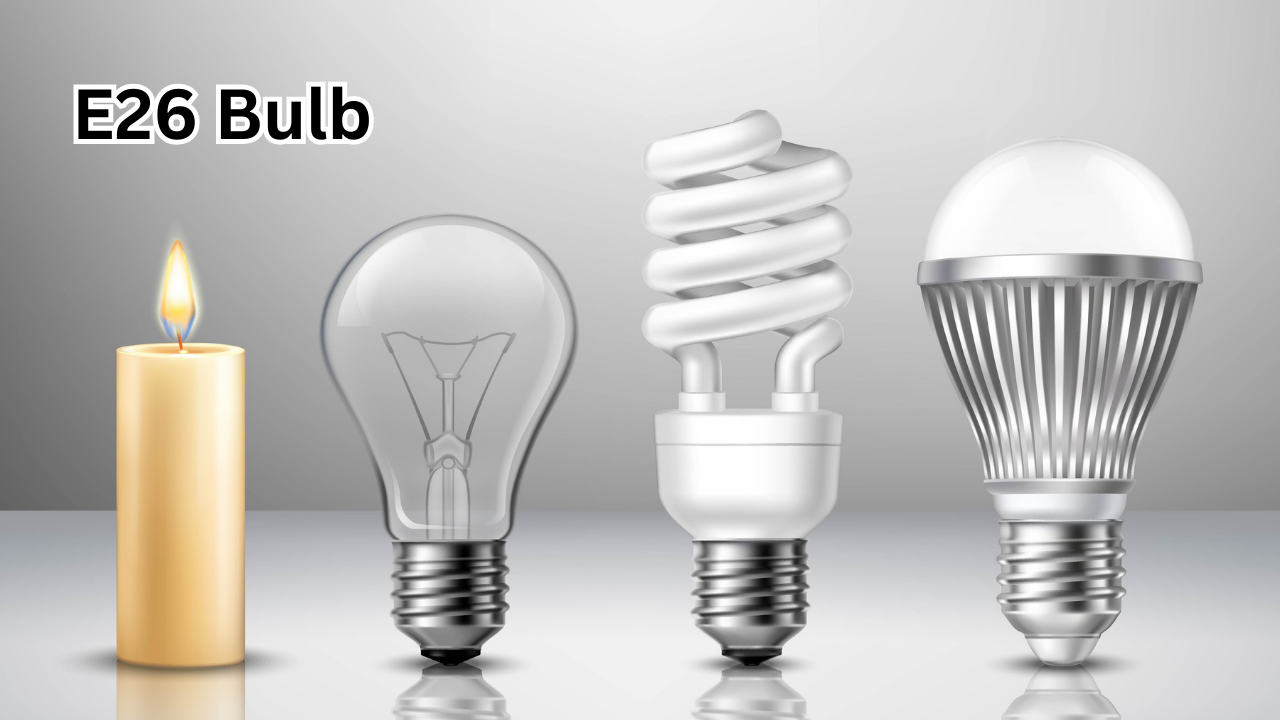
Because of its universal compatibility, the E26 base has become the standard for many types of bulbs, including LED, incandescent, halogen, and CFL bulbs.
History of the E26 Light Bulb Base
The E26 base originates from the original Edison screw design developed in the late 19th century. This simple yet effective screw-in mechanism revolutionized the lighting industry because it allowed people to easily replace bulbs without professional assistance.
Before the Edison screw system, light bulbs were difficult to install and replace. The introduction of screw bases like the E26 made lighting more accessible to households around the world.
Over time, the E26 base became the dominant lighting standard in the United States and Canada. Today, it remains one of the most widely used bulb bases globally, especially in residential and commercial environments.
How the E26 Bulb Works
An E26 bulb works by connecting to an electrical circuit through its screw base. When you screw the bulb into a compatible socket, the metal base establishes electrical contact with the socket terminals.
Here is how the process works:
First, the threaded metal shell connects to the neutral electrical contact.
Second, the small metal tip at the bottom of the bulb connects to the live electrical contact. Once the circuit is completed, electricity flows into the bulb and powers the light source inside it. Depending on the bulb type, the light may be produced through a filament, gas discharge, or LED semiconductor technology.
This simple design is one of the reasons why the E26 base has remained popular for more than a century.
Common Types of E26 Bulbs
One of the biggest advantages of the E26 base is that it supports multiple lighting technologies. Different types of bulbs can use the same E26 base while offering different lighting performance.
LED E26 Bulbs
LED bulbs are currently the most popular choice for E26 sockets. They use light-emitting diode technology, which produces bright light while consuming very little electricity.
LED E26 bulbs are known for their long lifespan, energy efficiency, and low heat output. Many homeowners are switching to LED lighting because it reduces electricity costs and requires fewer replacements.
Incandescent E26 Bulbs
Incandescent bulbs were historically the most common type of E26 bulb. These bulbs produce light using a heated filament inside a glass enclosure.
While incandescent bulbs provide warm and natural lighting, they are less energy-efficient than modern alternatives and have a shorter lifespan.
CFL E26 Bulbs
Compact fluorescent lamps, or CFL bulbs, also use E26 bases. These bulbs use a gas-filled tube that produces light through ultraviolet radiation and phosphor coating.
CFL bulbs are more energy-efficient than incandescent bulbs but less efficient than LED bulbs. They were widely used before LED technology became dominant.
Halogen E26 Bulbs
Halogen bulbs are a type of incandescent bulb that contains halogen gas to improve efficiency and brightness. These bulbs are often used in task lighting and spotlights.
Although halogen bulbs provide bright and clear illumination, they consume more energy compared to LED options.
Where E26 Bulbs Are Commonly Used
Because of their standard size and compatibility, E26 bulbs are used in a wide range of lighting fixtures.
In homes, E26 bulbs are commonly found in ceiling lights, table lamps, floor lamps, wall sconces, and pendant lighting fixtures.
In offices and commercial buildings, they are used in overhead lighting systems, desk lamps, and decorative fixtures.
Outdoor lighting also frequently uses E26 bulbs, including porch lights, garden lights, and garage fixtures.
Many modern smart bulbs also use the E26 base, making it easy to upgrade traditional lighting fixtures into smart lighting systems.
Benefits of Using E26 Bulbs
There are several reasons why E26 bulbs continue to be the preferred lighting option for many homeowners and businesses.
Universal Compatibility
The E26 base is widely compatible with standard light sockets. This makes it easy to replace old bulbs without changing the fixture.
Easy Installation
E26 bulbs are designed for simple installation. Users only need to screw the bulb into the socket until it is secure.
Wide Availability
Because E26 bulbs are so common, they are available in many stores and online marketplaces. Consumers can choose from a wide variety of brands, brightness levels, and color temperatures.
Energy Efficiency Options
Modern E26 LED bulbs offer excellent energy efficiency, helping households reduce electricity consumption and lower utility bills.
Versatile Lighting Styles
E26 bulbs come in different shapes and styles, including standard A19 bulbs, decorative filament bulbs, globe bulbs, and spotlight designs.
This versatility allows homeowners to match lighting with their interior design preferences.
Understanding E26 Bulb Shapes
Although the base remains the same, E26 bulbs come in many shapes. The shape affects how the light spreads and how the bulb looks in a fixture.
One of the most common shapes is the A19 bulb, which is the traditional pear-shaped bulb used in many household lamps.
Globe bulbs provide a round and decorative appearance, often used in bathroom vanities or modern lighting fixtures.
Reflector bulbs are designed for directional lighting and are commonly used in recessed lighting systems.
Edison-style filament bulbs combine vintage aesthetics with modern LED technology, making them popular for decorative lighting.
Each shape serves a different purpose while maintaining the same E26 base compatibility.
E26 vs E27 Bulbs
Many people confuse E26 and E27 bulbs because they appear almost identical.
The difference lies in the diameter of the base. An E26 base measures 26 millimeters, while an E27 base measures 27 millimeters.
Despite this small difference, the two types are generally interchangeable in many fixtures because the size variation is minimal.
However, E26 bulbs are typically used in North America, while E27 bulbs are more common in Europe and other international markets.
Understanding this difference is useful when purchasing bulbs online or using imported lighting fixtures.
Choosing the Right E26 Bulb
Selecting the right E26 bulb depends on several factors.
First, consider brightness, which is measured in lumens rather than watts. Higher lumens mean brighter light.
Second, choose a color temperature that suits your space. Warm white light creates a cozy atmosphere, while cool white light is better for workspaces and kitchens.
Third, consider energy efficiency. LED bulbs provide the best balance between brightness and electricity savings.
Fourth, check whether the bulb is dimmable if you plan to use it with a dimmer switch.
Finally, consider the design of the bulb if it will be visible in decorative fixtures.
Smart E26 Bulbs and Modern Lighting Technology
The rise of smart home technology has transformed traditional lighting systems. Many smart bulbs now use the E26 base, allowing users to control lighting through smartphone apps or voice assistants.
Smart E26 bulbs can change colors, adjust brightness, and operate on schedules. Some models even integrate with home automation platforms to create personalized lighting scenes.
Because the E26 base is so common, upgrading to smart lighting is often as simple as replacing an existing bulb.
This convenience has helped accelerate the adoption of smart lighting in homes around the world.
Energy Savings with LED E26 Bulbs
Energy efficiency is one of the most important benefits of switching to LED E26 bulbs.
LED bulbs use significantly less electricity than traditional incandescent bulbs while producing the same amount of light. In many cases, they use up to 80 percent less energy.
They also last much longer, often operating for 15,000 to 25,000 hours or more.
This long lifespan reduces maintenance costs and minimizes waste, making LED E26 bulbs an environmentally friendly lighting option.
Safety Tips When Using E26 Bulbs
Although E26 bulbs are easy to use, following a few safety tips can prevent damage or accidents.
Always turn off the power before replacing a bulb.
Avoid touching halogen or incandescent bulbs with bare hands, as oils from the skin can affect performance.
Make sure the bulb wattage does not exceed the fixture’s recommended limit.
Ensure the bulb is securely screwed into the socket to maintain proper electrical contact.
Following these simple steps helps ensure safe and reliable lighting.
Future of E26 Lighting
The E26 base has been used for more than a century, and it continues to evolve alongside new lighting technologies.
As LED technology improves, E26 bulbs are becoming even more efficient, longer-lasting, and smarter. Innovations such as tunable white lighting, color-changing bulbs, and voice-controlled systems are expanding the possibilities of home lighting.
Despite the development of new lighting systems, the E26 base remains a reliable and universal standard that continues to support modern innovations.
Conclusion
The E26 bulb remains one of the most important components of modern lighting systems. Its simple screw base design, universal compatibility, and wide availability have made it the standard choice for homes, offices, and commercial spaces.
From traditional incandescent bulbs to advanced smart LED lighting, the E26 base continues to support a wide range of technologies. Whether you are upgrading your home lighting, improving energy efficiency, or installing decorative fixtures, E26 bulbs offer a flexible and reliable solution.
Understanding how E26 bulbs work and how to choose the right type can help you create better lighting for any environment while saving energy and reducing long-term costs.
Also Read: Kia K4: The Stylish Next-Generation Sedan Redefining Modern Driving